Showing posts with label mundane and magical. Show all posts

Nov 21, 2013

To Drink is Divine Or, How To Divine With Your Drink - The Love and Lore of Coffee


I was reading an article last week that told of how coffee was the most recongnized scent in the world.  Not roses or lemons or lavender.  Coffee.  That intoxicating essence of roasted beans pressed or percolated into a favourite mug that fits your hands perfectly.

I was a late-bloomer when it came to drinking coffee, but I've always loved the aroma of it brewing.  I even did time as a barista for a year to help out a friend who owned a coffee shop.  I learned how a perfect espresso should look and smell, even though I didn't drink it myself.

Years later, I'm a coffee addict, trying to cut down to one cup a day.  The caffeine has become a bit hard to handle for me.  I'm working on blending in herbal fillers to my daily grind to soften the buzz without giving up on the taste.  Some of my favourite additions are roasted chicory root, roasted dandelion root, and cacao nibs.  Grind it all up with your beans and you've got a killer blend that won't have you levitating by mid-morning.  I'll do anything to not give up on coffee completely.

I envy
the cup of coffee
that gets
to kiss
your sleepy lips
awake
every cold
and bitter morning

~ Sade Andria Zabala

Coffee is much more than a delicious wake up call.  It has a varied history of culinary and magical use, as well as its own little superstitions.  Coffee grounds can be read as tea leaves are, should you want to negotiate a rather grainy cup, or you could simply read the cup as it is poured.  It has been said that if you find the bubbles in your cup (assuming your coffee is taken black and poured in a manner to induce bubbles) moving away from you, then difficulty may be heading your way.  If the bubbles appear to be moving toward you, then good fortune is sure to appear.  Or, you may simply wish to scry into your cup. It seems as though hovering over a steaming mug is a fairly common activity.

Should you want a little more oomph out of your cup, you might want to take it into a bath with you. Starr Casas of Old Style Conjure has a cleansing bath recipe that she regularly recommends.  You simply add one cup of strong, black coffee, a handful of salt (approx 4 tablespoons) and a tablespoon (or a capful) of lemon juice or ammonia to your bathwater.  Should you wish to use this as a more traditional spiritual bath, Starr advises taking the bath as the hands of your clock are moving downward, and reading Isaiah 41.

In Hoodoo Herb and Root Magic, Cathering Yronwode mentions that coffee bean husks can be used in uncrossing baths as well.  If you do roast your own beans and have an abundance of hulls and chaff (and aren't saving them all for baths,) they make a divine-smelling mulch for the garden.

Coffee fans love to boast about the health benefits of the bean.  Full of antioxidants, coffee has lately been touted as a great protector from nasties such as liver cancer, type 2 diabetes and Parkinson's disease. Research is, as ever, on-going, but there's another department in which coffee testing is showing glowing results - skincare.

Caffeine is a stimulant that increases blood flow, and it has been found to work topically.  Tannins found in coffee tighten and tone the skin.  That's great news when you want to pass on the exorbitantly priced scrubs at the beauty counter and instead create your own with ingredients you can find in your cupboard.  Coffee can be used all over the body (be gentle on your face,) as well as in a hair mask or rinse if you are a brunette.

For a super-simple coffee scrub, use a cup of fresh ground coffee and add grapeseed oil (or olive or sweet almond) very slowly.  Blend the scrub until you have a crumbly mix (too much oil will be hard to remove from your body and will cause a very slippery shower!)  You can also add sugar if you like, or substitute your favourite body wash for the oil.  Scrub away once or twice a week - you'll have baby soft skin for barely the price of a latte.

Whether you are drinking it, bathing in it, or divining your future with it, coffee is one divine ingredient in our mundane and magical cupboards that is not likely to be ignored any time soon.


Coffee folklore, baths and more can be found:


Picture via Creative Commons


Nov 7, 2013

Muscle Magic?


November has sunk into the valley in a cold, wet way.  Having had a warm, sunny October, I don't feel comfortable complaining, so I wait for the dry mornings to take my walks and extend hope that the deep cloud lets a bit more light through each day.

I'm feeling myself slip into that familiar hibernation feeling that happens as the days grow shorter and the temperatures drop.  To combat the urge to curl up and not move again, I've committed to using the treadmill on the days I don't go out for a walk.  I've been having quite a bit of fun on it actually, and I've found that a good, hard pace and the steady thud of my feet on the machine begins to take me out of my body, and leads me to some interesting meditative experiences and epiphanies.  I think that this is not unlike the euphoria that is referred to as a "runners' high" - except that I'm rarely at a full run.  It may be more along the lines of what is experienced while doing ecstatic (trance) dancing or a drumming journey - the sound of my feet and the white noise of the treadmill offering up a drum-like repetition for my mind to escape in to.

The whirling Dervishes knew how to get there.

The other body-magic synergy I've been pondering is muscle-building as sympathetic magic.  

Muscle is created after first tearing down the tiny muscle fibers in the tissue.  Your body then repairs or rebuilds these little fibers and the newly generated fibers begin to create bulk.  You are essentially tearing yourself down and rebuilding yourself - stronger.  This really gets me excited when I think about combining it with activities such as "tearing down" non-beneficial habits, relationships and situations where you just didn't say "no" when you might have wanted/needed to.  Add to that some work on creating new energy or movement in certain areas of your life, while your body is literally creating new muscle cells.  Work associated with health, fertility, prosperity would all be something I'd consider here.

I've been glancing at the hand weights that have been winking at me from the corner of the room, and I've been thinking that since I'm no longer hauling dirt, plants or vegetable harvests or pushing a lawn mower anymore, it might be time to pick those little irons up again.  

And why not work a little magic while working my muscles?


* For some great reading along this topic, check out the brilliant Peter Paddon's "Visceral Magick"
* Although I'm fiercely behind on her podcasts, "Iron Powaqa" is a weight-lifting witch with sass - worth a listen!  I'm going to try to catch up on these and see what insight she has on this topic.
* art "Dancing Dervishes" by Amedeo Preziosi via Wiki Commons

Aug 13, 2012

The Mundane and the Magical - Basil


Also called “Our Herb,” “St. Joseph’s Wort” or “Witches Herb”

Basil is an inspiring plant.  Although it lends itself to delightful dishes in the kitchen, it also roused fear in days of old, having thought to be a plant of witches and all sorts of evil.

Basil is a happy pot or garden herb.  It has been said that the stricter you treat it, the better it will produce for you, but I’m not one to terrorize my plants.  I believe that this suggestion was a result of the fact that basil will bush out and grow a stout, healthy plant if you snip the tops off the basil as it grows.  Many people do not like to cut down into the hard-wood of a herb, but harvesting these top leaves and letting the side leaves alone, allows for a bushier plant.  Pinch back the flowers as they form and you’ll have continued leaf growth.  You may even manage to get two good harvests.

Basil is said not to grow well near rue, one report being that it will “curl up and die.”  I have read that rue will exude a chemical that prevents some other plants from thriving beside it, so this may be where the idea that basil will not grow well near rue comes from.

Basil is an annual, so even if you bring it inside when the frosts begin, it will not last through the winter.  However, there are plenty of ways to continue to enjoy your basil after it is harvested.  Dry leaves flat on screens or in a dehydrator and keep in a glass jar.  You can also chop fresh leaves and freeze them in ice cube trays with a bit of water for use in sauces, soups or pesto.  Basil is a wonderful addition to pastas, chicken or vegetable dishes.

Medicinally, basil is rumoured to be good for the kidneys, but when researched it is found that most do not use it for internal healing at all (aside from adding it to rich food as a digestive aid.)  It is said to be a headache cure or an aid to memory, when used in aromatherapy.  Putting a few drops of basil essential oil, or a handful of fresh, crushed leaves in a steam bath and inhaled is said to help with sinus and chest congestion.  And used topically, basil is supposed to be wonderful for use healing skin and removing the sting and/or itch from insect bites.  It also boasts some aphrodisiacal qualities.

The folklore on basil is fun and fascinating.  Here a just a few of the many wild legends about basil:

~ “Named after the fearful creature the Basiliske,* it is the Devil’s plant in Greece; a charm against witches in Wales.”  Vernon Quinn 1937

*Of note - other texts say that the Basilisk got its name from basil OR got its name from the same Greek word basiliskos, which means “little king,” as basil (basilicum) did.  This is more likely than Mr. Quinn’s idea that basil was named after the serpent that could kill with a look.  Also, basil has been reported as being both a guard against, and a favoured herb of witches.

~ Culpeper says:  “Mizaldus affirms, that if it (basil) be laid to rot in horse-dung, it will breed venomous beasts; and Hollerious, a French physician, affirms upon his own knowledge, that an acquaintance of his on smelling it had a scorpion bred in his brain.”

Basil is said to be a herb of Mars, under Scorpio, which is what likely led to it being so tied to scorpions and other “venomous beasts.”  Strangely, there is lore that states basil can both call forth and protect against, snakes and scorpions.

~ Witches were said to favour basil as a flying herb.  After brewing the basil juice, they would rub their broom or horse and their bodies to allow for flying.  A flying recipe is, as follows:

Witches Brew For Flying  - as recorded by Hon. Ralph Shirley (1865-1946)

Oil or juice of Our Herb (basil)
Bats’ blood
Cinquefoil
Nightshade *
Water parsnip *
Sweet Flag

*This recipe contains two poisonous plants and if it is in fact accurate, would have to be created by an incredibly knowledgeable herb worker so as not to kill the partakers.

~ The heady scent of basil has given it the reputation of being a herb of love.  It is said to foster favour between lovers as well as quell discord within the family.  As such, it is a great pot herb for indoors.  Or one may wish to tuck a basil leaf under the pillow of their sweetheart.

~ Basil is said to be a protective herb.  Use as a floor wash or to wash windows and doors to keep your home safe.  Use in strewing herbs or floor sweeps.  Give a small pot of basil as a hostess gift to bless and protect your friend’s home.

~ Perhaps due to the coin-shaped leaves of sweet basil, the plant is also associated with money.  Carry it in your pocket or purse to attract money to you.

~ It is also found to have been used as a funerary herb amongst Hindus, placed over the breast upon burial (said to have been a rite adopted from the ancient Egyptians.)


Resources:

Essential Herbal Wisdom - Nancy Arrowsmith
Mysterious Herb & Roots - Mitzie Stuart Keller
Culpeper’s Complete Herbal - Nicholas Culpeper
The Essential Herbs Handbook - Lesley Bremness
Cunningham’s Encyclopedia of Magical Herbs - Scott Cunningham
Hoodoo Herb and Root Magic - Catherine Yronwode


Jun 10, 2011

The Mundane and the Magical - Gargoyles


This handsome devil sits outside my home, keeping guard.  Most people don't notice him right away.  But when they do, they are often taken aback.  I usually get a comment about my "interesting ornament" or "odd garden statue."  I think he's rather charming.

The gargoyles created today may be relegated to common garden statuary, but the original gargoyles had much more elevated beginnings.

The word "gargoyle" is an offshoot of the word "gargle" (from the old French "gargouille" meaning throat.)  Considering gargoyles were orginally built as decorative water spouts at the top of tall buildings sending rainwater shooting out of the mouths of the sculptures, the name seems fitting.

Gargoyles were orginally carved in many forms.  Humans, animals, human-animal hybrids and chimeras (animal-animal hybrids) were all employed as suitable spouts, but if the carvings were merely decorative and served no water deflecting purposes, they were called "grotesques."

Churches sported these fantastical stone beings too.  Were they simply a means to an end as far as architecture?  Surely the church could have employed it's builders to create angelic spouts?  Speculation states that the gargoyles were an object lesson.  See the devil, how he hangs about waiting on the unfaithful?  Better is that within these walls than that which is found without.  It's easy to see how the strict looking statues could have become a warning against the evils of the world.


Whatever their beginnings, there are few gargoyles being created now in service to their old duties.  Because of their weight and risk of falling (and the invention of modern downspouts) any gargoyle being built now is more likely a grotesque meant as decoration.

Smaller, more portable statuary has found it's way into homes and gardens as a symbol of protection, spirit, mystery or simply a source of entertainment.

Ellen Dugan in her newest book Practical Protection Magick has even included a "Gargoyle Warding Spell" to empower your own gargoyle for protection.

Search for them at garden centers, outdoor home furnishing stores or any shop that carries statuary.  I had to ask for mine as the store didn't carry them, but they regularly brought in other garden decorations.  I merely mentioned what I wanted and they found him for me.

Whether you bring a gargoyle home for protection or mere enjoyment, these wonderful stone charmers are definitely a great addition to your space!

Feb 5, 2011

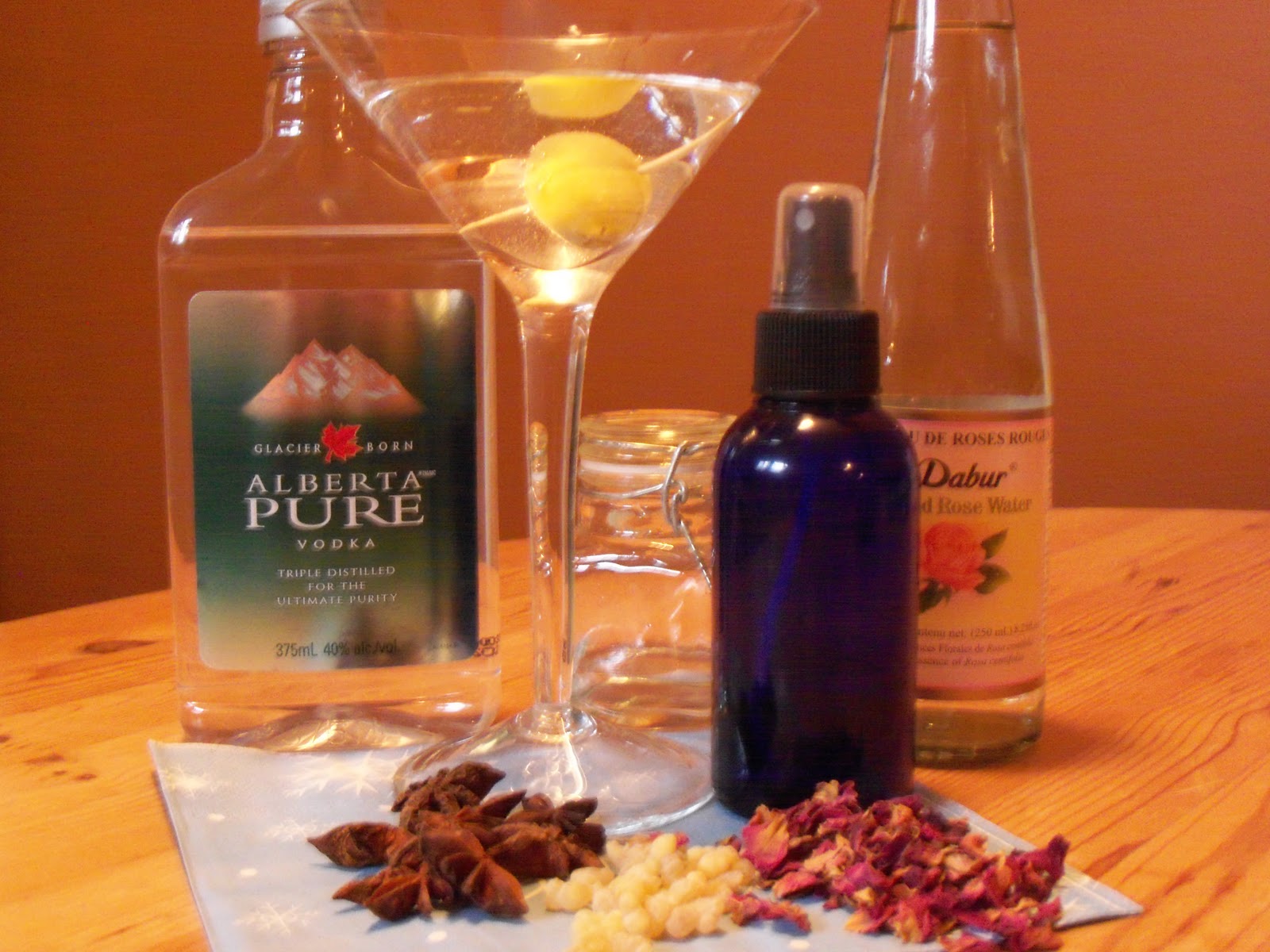
The Mundane and the Magical - Vodka


“This drink has a magical power.  It strengthens the weak, and revives those who have fainted.  Those tired after work and physical activity can return their life forces by this drink much sooner than by nourishment.  It works as a diuretic, an appetizer, an antitoxin.”
~ Carolus Linnaeus (18th-century physician documenting the effects of vodka)
~ quote found on www.vodkarocks.com

Ah, vodka.  The stuff of gods  Or at least, of Russians and great martinis.

This kicks off a new series that will pop up on occasion, discussing the wonderful ingredients that we use in both our mundane and magical lives.  Our first item is vodka.

Early vodka production was attributed to Poland, where it was made in the early Middle Ages for medicinal use.  Use of vodka quickly spread, and the "vodka belt" (Russia, Poland and the Ukraine to name a few places) is the eastern region of Europe where vodka is drunk straight with no additives or mixes.

Myself - I prefer a martini - either "Dirty" (with olive juice and olives) or some other fluffy version with fruit juices and other liquers.  Here is a recipe I like that reminds me of my friends who like to call my path "that woo woo stuff you do":

Woo Woo Martini 
(Actual name. Found in "The Martini Book" by Sally Ann Berk)

6 parts cranberry vodka
1 part peach schnapps

Combine in a cocktail shaker over cracked ice.  Shake well and serve in a martini glass, garnished with a lemon twist. 

Rue's note:  In order not to get completely smashed -drink slowly or add 1 or 2 parts of cranberry, peach or other desired fruit juice to cocktail.  This is powerful stuff!


Using good vodka is important if you are drinking it straight or with minimal additives.  I highly recommend "Crystal Head Vodka" for sipping and it's distillation process (not to mention it's packaging) lends to some wonderful magical symbolism.  This vodka is triple filtered through Herkimer Diamonds.  These are not actually diamonds, but clear quartz crystals found only in upstate New York.  Although they are naturally occuring, they have a diamond-cut appearance, which gives them their name.  Some of the magical qualities associated with these stones include: astral travel, power and healing.


Magical uses of vodka are many.  Used as a stabiliser, vodka is added to our plants and herbs to create tinctures, flower essences and mixtures such as Florida Water.  Vodka used as a stabiliser does not have to be "the good stuff," any bottle will do.

There are many recipes and schools of thought on the exact way to make a flower essence.  The general idea is to take a clear bowl of spring water into your garden and politely trim a few flowers (or leaves if you are using herbs) and place them in the bowl in direct sunlight for 3-8 hours.  What plants you use depends on your need and the qualities of those plants.  Please be sure to know the plants you are using and their possible toxicity! 

Strain the flower-water into a bottle and add vodka or brandy (or apple cider vinegar if you don't want to use alcohol.)  Usually 1/4 flower-water to 3/4 alcohol works.  This is then your "Mother" essence.  The idea of essences is that the more diluted they are, the more effective.  So, from the Mother, place 2-7 drops into a dosage (dropper) bottle and add stabiliser alcohol.  I like to use 1/2 spring water and 1/2 alcohol at this stage, as I allow my neices to use my essences and don't want them imbibing much.  Dosage is usually two to four drops, up to four times a day from your dosage (dropper) bottle. Or you can further dilute this mixture.

Tinctures are simply plant material plus a stabiliser placed into a dark bottle and stored for up to a month, but shaken daily.  These are then strained and taken as drops, either under the tongue or on the skin or in food or drink.  Echinacea in tincture form is something many people are familiar with.

Whether you are a martini fan or just use it in your herbal remedies, vodka is a versatile ingredient to have in your cupboard.

Slainte!